Saturday, 14 September 2024

World Kid Lit Month 2024: Feelings

Some of these titles have a looser connection to feelings than others. But, I wanted to showcase them all. 


Choices by Roozeboos. 

Not an obvious choice for feelings, but trepidation, and uncertainty are also feelings. I love the diversity of the people around the main character. There are many expressions of queer identity quietly shown - just people going about their lives, as it should be. 


The Grand Hotel of Feelings by Lidia Branković. 

I don't know how many languages this has been translated into, but it's still not enough. All of them. Every single one. Note that the last page, depicting other hotels, falls into cultural stereotype territory. 


My heart by Corinna Luyken. 

My heart aches reading this one. It is a beautiful story about protecting your heart, but also letting it experience things. 


What do you do with a problem? = Ka pāngia ana ki te raru, me aha? By Kobi Yamada, Kanapu Rangitauira, & Mae Besom.


To say I'm proud of the organisation I work for / with is an understatement, when it comes to these books. These are te reo Māori translations, produced as a Vox book product. Vox books have readers attached. 
World-first - and world-class - material, here. 

Milestones in te ao Māori and te reo Maōri picture book publishing

Tēnā koutou kua huihui mai nei

    (Hello to all gathered here)

E mihi ana ki ngā mana whenua

    (Greetings to the indigenous people of the land)

Nō Airangi me Ingarangi ōku tīpuna

    (My ancestors came from Ireland and England)

I tipu ake ahau ki Opanuku

    (I grew up in Henderson, Auckland)

Ko Anne tōku ingoa

    (My name is Anne)

E mahi ana ahau hei poukōkiri

    (I work as a senior librarian)

Nō reira, tēnā koutou katoa

    (Once again, hello to you all)


This is a list dear to my heart. 

I’ve been around children’s publishing for quite a while, and watched New Zealand’s publishing landscape change, and trends come and go – and grow… Some books have stood out and made me cheer. Made me celebrate how far our country – our reading public – have come along a bilingual journey. I know we have miles to go, but we have made progress.

A step along our path was the creation of LIANZA’s Te Kura Pounamu Award in 1985, which in 2016 became New Zealand Book Awards for Children and Young Adults Te Reo Māori (Te Kura Pounamu Award).

There are so many books and so many creators I could have highlighted – but it came down to my memory and the books that stuck with me.


The Caltex book of Maori lore text by James Cowan; revised by J.B. Palmer; illustrated by Dennis Turner. 

Published in 1959, this was a much read and loved book in my Pākehā household. It is dated, but it introduced te ao Māori to a wider community. In a similar vein was Maori legends retold by Alistair Campbell published in 1969. 


The boy and the taniwha by R. L. Bacon, the story teller; Para Matchitt, the painter. 

Published in 1966, this book introduced R. L. Bacon to the reading public. This original story was illustrated to evoke traditional Māori carving and cave painting. This is a true milestone: quality of illustration, text, and publishing standards. 


Maori legends for young New Zealanders by Katarina Mataira; drawings by Clare Bowes. 

First published in 1975, this is the book I remember from childhood. It is particularly notable, as it announced the arrival of a literary luminary: Dame Kāterina Te Heikōkō Mataira. 


How Maui found his mother by Peter Gossage. 

Originally published as How Maui-tiki-tiki-a-Taranga found his mother in 1975, Peter Gossage went on to have a heralded career in publishing, and, it was through his work that many non-Māori came to know Māori legends.


The house of the people by R.L. Bacon; illustrations by R.F. [i.e. R.H.G.] Jahnke. 

Originally published in 1977, this won the inaugural Russell Clark Award for illustration in 1978.  Bacon published versions of many traditional stories, presenting te ao Māori and tikanga Māori to the non- Māori world.


The wonder book of Māori legends by A.W. Reed; illustrated by A.S. Paterson. 

First published as Wonder tales of Maoriland in 1964, this 1977 title literally demonstrates New Zealand’s movement to a more culturally-aware climate. Reed was a powerhouse in New Zealand publishing, collating and sharing our stories.


The kuia and the spider by Patricia Grace; illustrated by Robyn Kahukiwa. 

These two wahine toa teamed up to create two classics of New Zealand’s publishing, this, and Watercress tuna and the children of Champion Street. Together, or separately, they are worth checking out.


The house that Jack built by Gavin Bishop. 

Originally published in 1999, although this features no te reo Māori in the text (being a traditional English rhyme) the illustrations are a tour de force in imagining the colonisation of New Zealand. It is stunning, end paper to end paper.


Tekiteora, kei hea o hu? nā Ngareta Gabel; nā Ali Teo raua ko Astrid Jensen ngā pikitia.

Published in 2003, and then adapted and translated into te reo Pākehā as Oh hogwash, Sweet Pea! by Hannah Rainforth.  Yes, this began life in te reo Māori. It is a joy to read in any language.


Nanny Mihi's treasure hunt written by Melanie Drewery; illustrations by Tracy Duncan.

The first Nanny Mihi book, Nanny Mihi and the rainbow, was published in 2001. This title in 2004. I rejoice in the fact there is no glossary – we are expected to understand te reo Māori kupu (words). See also Tracy Duncan’s solo titles.


Te haere ki te rapu pea nā Michael Rosen ngā kōrero; nā Helen Oxenbury ngā pikitia [retold by Michael Rosen; illustrated by Helen Oxenbury]; nā Kawata Teepa i whakamặori. 

In 2012, Huia began publishing te reo Māori translations of classic picture books, with We’re going on a bear hunt. It was great to see big-name, overseas publishers so willing to have their works translated into te reo Māori. 


Ngā ngeru nā Amiria Stirling ngā kōrero; nā Sarah Illingworth ngā pikitia. The cats of Pāia Street by Amiria Stirling; illustrated by Sarah Illingworth.

This manuscript was the first winner of the Storylines Te Kahurangi Kāterina Te Heikōkō Mataira Award, which is for a manuscript written originally in te reo Māori. 


Look: a tummy time book by Gavin Bishop.

A recent addition to Gavin Bishop's growing collection of board books, I've included this wordless title based on how fabulous it is - which has been recognised by overseas critics. Mainly, Betsy Bird:
YUSSS!!! Oh lord, people, why is something like this so rare? All I want is for accomplished picture book illustrators to hone their talents to the board book format and THEN be paired with those books that will be most useful to children. I’m talking accordion books/high contrast/lift-the-flaps/you name it. Gavin Bishop is of Maori descent (Ngāti Pukeko, Ngāti Awa, Ngāti Mahuta, Tainui) and is a friggin’ New Zealand national treasure. He’s also been making books for kids for decades upon decades. LOOK is a particular delight with faces on one side of the accordion pull-out pages, and objects on the other. Meanwhile FRIEND goes through a range of different emotions with a little dog as your avatar. More of this please!

`

Originally published with Auckland Libraries. 

See also, my post on Exploring te ao Māori through picture books, with Storytime Solidarity. 

Thursday, 12 September 2024

World Kid Lit Month 2024: Family and friends

This is a bit (a lot!) of an amalgamation of things, someone of a 'I want to include this, but where does it fit?' method of categorisation. 


Crow Baby by Helen Milroy. 

Crow Baby was born with two spirits: crow and human. This timeless tale, set in a timeless time - no-time and yet all-time - is deeply rooted in Australian First Nations stories and histories. 

Helen Milroy is a descendant of the Palyku people of the Pilbara region of Western Australia. 


Halu Bongo! Be quiet Bongo! By Lani Young, Sisilia Eteuati & Nikki Mariner. 

A story of a beloved - yet barking - dog and how he annoys everyone. Until he saves the day. The lushness and busy-ness of a Samoan village is to the fore. I love how you can see the brushstrokes in the bright art. 


The Hug by Eoin McLaughlin & Polly Dunbar. 

This treasure is the first in a series of picture books featuring friends Hedgehog and Tortoise. The story reads from front-to-back, and from back-to-front, in parallel texts. 


L is for Love by Atinuke & Angela Brooksbank. 

I L is for LOVE this book - and the previous stories about this mischievous baby and their family in and around Lagos. 


'Ohana means family by Ilima Loomis & Kenard Park. 

A cumulative tale that celebrates Native Hawai'ian culture. 

Tuesday, 10 September 2024

World Kid Lit Month 2024: Death

Death has become a specialist subject for me. I have read hundreds of children's books on the topic. So, it was hard to limit to just a few. Having to think of non-US titles did help. Two of these are translated. Two are from Aotearoa New Zealand, one from a Māori perspective, and one from a Pākehā (white) perspective. 

The fact of death / cannot destroy what has been given. 


Cry, heart, but never break by Glenn Ringtved, illustrated by Charlotte Pardi, translated from the Danish by Robert Moulthrop. 

Death is not to be feared in this gentle tale, but cared for, and embraced as part of life. This Death is a weary traveller, who is so, so, so loving and gentle. 


Dadaji's paintbrush by Rashmi Sirdeshpande & Ruchi Mhasane. 

I wish that everyone has a Dadaji as loving and mourned as this. The message of this book is one that exemplifies the poem I have based my blog title on, which I shared below. 


Grandma lives in a perfume village by Fang Suzhen, Sonja Danowski, & Huang Xiumin. 

A conversation starter, with a focus on the grief of a child, for a parent. It's just that the child is also a parent. 

My father and his older sister were in their 50s when their mother died. I heard my father say, on the phone, "we're orphans" to my aunt. The fact you're a grown-up and maybe a parent, or grandparent, when your parents die, does not stop you from being a child. A grieving and lost child. 


Millie's big decision by Ian Eagleton & Max Rambaldi. 

The death of Millie's beloved grandmother helps give this story impetus. How can Millie adopt and love a new dog, when they could die, and she would grieve. The inclusion of two dads is incidental to the story, but is a lovely bonus. 


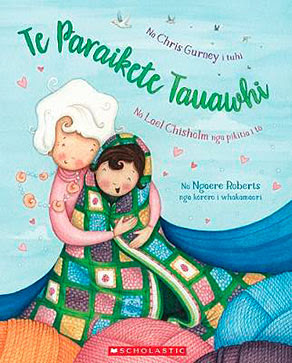
The hug blanket by Chris Gurney & Lael Chisholm. 

I can see myself, wrapped in my hug blanket, on the dreaded day my mother dies. And the weeks to come. The visits to Nana's grave, in this book, bring back memories of my family attending funerals and burial services. The solemnness, and sadness, and the laughter. I don't think anyone has done cartwheels at a graveside to show our departed whānau (family) how good they're getting at them, though. 

Riwia and the Stargazer by Linda Tuhiwai Smith & Isobel Joy Te Aho-White. 

I had contemplated placing this book in another section, but the representation of a Māori tangihana, means it is best suited here. This book deals with so much more, including homelessness. 


Sunday, 8 September 2024

World Kid Lit Month 2024: Dance

Dance can be a serious business - but it can also be a joyous celebration. Dance can tell stories. Share histories. Help with self-expression. Be an expression of your heritage - singular, or multi-faceted. 


Dazzlehands by Sacha Cotter and Josh Morgan. 

Oh my goodness! This is a joy and a delight! It has captured readers around Aotearoa New Zealand. It has even been adapted as a ballet! 


The greatest haka festival on earth by Pania Tahau-Hodges & Story Hemi-Morehouse. 

If you ever have the chance to see any of Te Matatini - then do so! 


Haka by Patricia Grace & Andrew Burdan. 

If you watch Te Matatini, you'll see a lot of haka. This is the story of the one that's the most famous: Ka Mate. I've chosen this video, as it has subtitles, and translations. 


Watercress tuna and the children of Champion Street by Patricia Grace & Robyn Kahukiwa. 


I love the joy in this Aotearoa classic, and the way it demonstrates how diverse our communities are. 


Luna loves dance by Joseph Coelho & Fiona Lumbers. 


Luna loves to dance, but does that mean she can pass exams and be a 'real' dancer? A story as bright as the illustrations, and Luna herself.